


Sponsored Residential Programs
If you have ever considered opening your home to support an adult with developmental or intellectual disabilities, learning about sponsored residential Virginia programs is an excellent place to begin. Across the state, families and individuals are exploring ways to provide stable, compassionate homes for people who benefit from personalized support and community-based living. Sponsored residential providers in Virginia play a meaningful role in helping individuals live with dignity, independence, and connection.
What is a Sponsored Residential Program?
Sponsored residential Virginia programs allow qualified individuals or families to provide residential support to adults with developmental disabilities through Medicaid-funded services. Providers can work with licensed agencies, complete training and background checks, and receive compensation through the Developmental Disabilities (DD) Waiver system
Understanding Sponsored Residential Services in Virginia
Sponsored residential services in Virginia are community-based housing and support programs designed for adults with developmental or intellectual disabilities who want to live in a family-style environment instead of a large group facility. Through these programs, individuals are matched with carefully selected providers who offer housing, daily support, companionship, and assistance with personal goals. The model is built around the idea that people thrive in environments where they feel included, respected, and connected. Rather than focusing only on clinical support, sponsored residential care focuses on meaningful relationships and participation in everyday life.
A sponsored residential provider may help an individual with:
- Meal preparation and nutrition
- Transportation to appointments or community activities
- Medication reminders and daily routines
- Budgeting and life skills
- Social inclusion and recreational opportunities
- Personal care assistance when needed
- Emotional support and companionship
Providers often describe the relationship as similar to extended family living. Individuals typically have their own private bedroom and become integrated into the household and local community. Virginia has increasingly prioritized community-based support systems over institutional settings. As a result, sponsored residential programs have grown significantly in importance within the state’s developmental disability services network.
The program also benefits families who may no longer be able to provide full-time support for their loved ones. Sponsored residential arrangements can offer peace of mind while helping individuals maintain independence in a safe and supportive home. Because every individual has different needs, the support is personalized. Some people require minimal daily assistance, while others may need more structured supervision. Matching is an important part of the process, and agencies work carefully to ensure compatibility between providers and individuals. For compassionate people who value service, patience, and community involvement, becoming a sponsored residential provider can be both emotionally fulfilling and financially sustainable.
What is the Virginia DD Waiver?

The Developmental Disability Waiver, often referred to simply as the DD Waiver, is a Medicaid-funded program that helps individuals with developmental disabilities access long-term community-based support. The DD Waiver is the Medicaid Umbrella for sponsored residential services throughout the state. Without the waiver system, many individuals would only have access to institutional care or limited services. It allows people to receive support while living in homes and communities that promote independence and quality of life. Virginia currently operates several developmental disability waivers, including:
- Community Living Waiver
- Family and Individual Supports Waiver
- Building Independence Waiver
Sponsored residential services are most commonly associated with the Community Living Waiver, which supports individuals who need more comprehensive residential assistance. This is what THE UP CENTER requires. The waiver system is administered through the Virginia Department of Behavioral Health and Developmental Services (DBHDS) in partnership with the Department of Medical Assistance Services (DMAS). To qualify for a DD waiver in Virginia, individuals generally must:
- Have a documented developmental disability diagnosis
- Meet Medicaid eligibility requirements
- Require a level of care consistent with waiver guidelines
- Complete assessments and screenings
Waiver slots are limited; so many individuals spend time on a waiting list before receiving services. Once approved, however, the waiver can cover a wide range of supports, including residential care, day support, employment services, transportation, and therapeutic services. For providers, understanding how the DD Waiver works is essential because reimbursement, documentation, and service requirements are all connected to the waiver structure.
The waiver system also prioritizes person-centered planning. This means support plans are tailored to each individual’s goals, preferences, and strengths rather than applying a one-size-fits-all approach.
As Virginia continues expanding community integration efforts, DD Waiver services remain one of the most important pathways for individuals seeking stable and supportive living arrangements.
How The Up Center Supports Community Living Waiver Services
At The Up Center, we proudly offer sponsored residential support through Virginia’s Community Living (CL) Waiver program – a Medicaid-funded service designed to help children and adults with developmental disabilities live safely and successfully in home and community-based settings instead of institutional environments.
The Community Living Waiver is specifically intended for individuals who require ongoing support in daily life and may need residential services, behavioral assistance, or complex medical support. Through this waiver, individuals can access personalized care while remaining connected to their communities, relationships, and long-term goals.
As a provider agency, The Up Center works closely with individuals, families, caregivers, and support coordinators to create stable and compassionate living arrangements through sponsored residential services. Our approach focuses on dignity, inclusion, independence, and long-term relationship building. We understand that every individual’s needs are different, which is why our team takes a personalized, person-centered approach to matching providers and residents. We carefully consider lifestyle compatibility, support needs, communication styles, and long-term goals to help create successful placements that feel safe, respectful, and truly supportive.
What Services Can Be Covered Through the CL Waiver?
The Virginia Community Living Waiver can fund a wide range of supports that help individuals thrive in everyday life. Depending on eligibility and assessed needs, services may include:
- Sponsored Residential Services
- Supported Living
- In-Home Supports
- Respite services
- Companion services
- Skilled nursing
- Therapeutic consultation
- Community engagement and coaching
- Employment and transportation supports
- Crisis support services
- Assistive technology and home modifications
These services are designed to help individuals remain active participants in their communities while receiving the level of support necessary for health, safety, and personal growth.
Who Qualifies for the Community Living Waiver?

The CL Waiver is generally available to children and adults who:
- Have a diagnosed developmental disability
- Meet ICF/IID level-of-care criteria
- Require waiver services within 30 days
- Need community-based services to avoid institutional placement or transition from institutional care
Because waiver services are managed through both DMAS and DBHDS, eligibility and enrollment involve screenings and assessments conducted through local Community Services Boards (CSBs).
Why Families Choose The Up Center
Families looking for sponsored residential Virginia services often want more than basic care – they want a provider agency that genuinely values connection, trust, and long-term stability.
At The Up Center, we believe community-based support should feel personal, empowering, and compassionate. Our team remains actively involved throughout the process, from provider recruitment and training to placement support and ongoing communication.
Whether you are a family searching for supportive housing options or someone interested in becoming a sponsored residential provider, The Up Center is committed to helping individuals build meaningful lives within safe and welcoming homes.
Become a Sponsored Home Provider
Who Can Apply as Sponsored Residential Providers in Virginia?
Many people are surprised to learn that providers come from a wide variety of backgrounds. Sponsored residential providers in Virginia are often caring adults who want to make a positive impact while opening their homes to someone who benefits from support and companionship.
Basic Eligibility Requirements
In most cases, providers must:
- Be at least 21 years old
- Have a stable source of income
- Own or rent a suitable home
- Pass criminal background checks
- Complete training requirements
- Provide references
- Maintain a safe living environment
- Be physically and emotionally capable of providing support
Providers may be single adults, married couples, retirees, professionals working from home, or families with children. Diversity in provider households helps agencies create better matches for individuals seeking placement.
Can Family Members Become Providers?
In some circumstances, relatives may qualify to provide services, though rules and funding structures can vary. Agencies can explain whether a family arrangement meets Virginia program guidelines.
Do You Need Healthcare Experience?
Previous healthcare or caregiving experience can certainly help, but it is not always required. Many providers begin with no formal experience and learn through agency training, mentorship, and hands-on support.
The ability to create a stable and welcoming home environment is often more important than professional credentials.
Become a sponsored residential provider with The Up Center and make a meaningful impact in someone’s life. Learn more about the qualifications, application process, and how we thoughtfully match individuals with the right home and support environment.
How Does Sponsored Residential Pay Work?

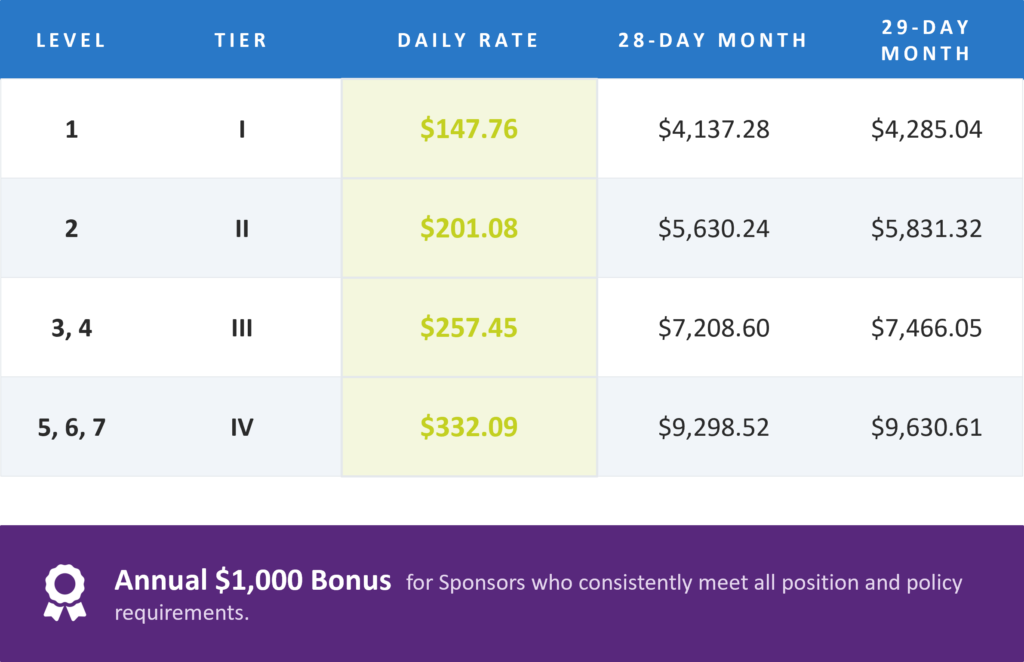
Pay for sponsored residential services typically comes through Virginia’s Medicaid DD Waiver system and is administered by DBHDS-licensed agencies that coordinate support and reimbursement. Compensation varies depending on the individual’s level of support needs, waiver funding tier, and agency structure. Providers are generally paid monthly and may receive additional reimbursement related to the individual’s care needs.
Sponsored residential payments are intended to help cover:
- Housing expenses
- Food and utilities
- Transportation support
- Supervision and caregiving time
- Daily living assistance
- Household accommodations
Factors That Influence Compensation
Several factors may affect provider payments:
- Individual support intensity
- Medical or behavioral needs
- Required supervision levels
- Geographic region
- Agency reimbursement structure
- Number of individuals supported
Higher support needs often correspond with higher reimbursement rates.
Are You Ready to Become a Sponsored Residential Provider?
If you are looking for a meaningful way to support others while creating lasting community impact, now may be the perfect time to become a sponsored residential provider. Virginia continues expanding community-based disability services, and compassionate providers remain an essential part of that mission.
Whether you are an experienced caregiver or simply someone with a stable home and a desire to help others thrive, sponsored residential programs can offer a rewarding opportunity to make a difference every day. The best next step is to contact The Up Center to learn about eligibility requirements, training opportunities, and the application process.
As demand for supportive housing grows across the state, providers who bring empathy, patience, and dedication are more important than ever. Opening your home could become the beginning of a transformative experience for both you and the person you support.
Sponsored Residential Virginia FAQ
For many providers, the greatest rewards are personal rather than financial. Sponsored residential arrangements often lead to lasting relationships, shared experiences, and a strong sense of purpose.
Providers frequently describe the experience as life-changing because they witness individuals gain confidence, independence, and stronger community connections.
By offering a stable home, providers help reduce isolation and promote inclusion for adults with developmental disabilities.
Simple everyday activities — cooking dinner together, attending local events, celebrating holidays, or learning new skills — can have a tremendous impact on someone’s quality of life.
Sponsored residential care can also offer flexibility for people seeking home-based work or supplemental income.
Retirees, remote workers, stay-at-home parents, and caregivers often appreciate the ability to provide support within a home environment rather than a traditional workplace.
Providers receive guidance from agency staff, case managers, nurses, and support coordinators.
This ongoing partnership helps ensure providers have resources available when questions or challenges arise.
Many providers gain new perspectives, stronger communication skills, and a deeper understanding of disability advocacy and inclusion.
The experience often strengthens empathy, patience, and appreciation for human connection.
While sponsored residential care can be rewarding, it is important to approach the role realistically. Providers take on meaningful responsibilities, and caregiving can sometimes be emotionally or physically demanding.
New placements may involve adjustment periods for both the provider and the individual. Building trust takes time, and routines may need to evolve gradually.
Providers are typically responsible for maintaining records related to medications, appointments, incidents, and support activities.
Agencies help guide this process, but organization and consistency are important.
Supporting another person’s well-being can carry emotional weight, particularly during difficult moments or health challenges.
Strong communication with agency staff and support networks can help providers manage stress effectively.
Because sponsored residential relationships often become deeply personal, maintaining healthy boundaries and professional expectations remains important.
Providers must balance compassion with structure, consistency, and respect for individual autonomy.
The approval timeline varies depending on the agency, background check processing, home preparation, and training completion. In many cases, the process may take several weeks to a few months.
Some providers may support multiple individuals depending on home capacity, licensing considerations, and agency approval. However, placements are carefully evaluated to ensure quality support and household compatibility.
Yes. Most agencies require continuing education and ongoing provider development to maintain compliance and improve support quality.
No. Sponsored residential services primarily support adults with developmental or intellectual disabilities through Medicaid waiver-funded programs, while foster care typically involves children within the child welfare system.
Yes. Person-centered planning is a core part of Virginia’s disability support system, and individuals generally participate in selecting compatible providers.
The DD waiver waitlist Virginia families experience can vary significantly depending on urgency, available funding, and regional demand. Virginia uses a priority-based system that categorizes individuals into different urgency levels based on health, safety, caregiver status, and support needs.
The DD Waiver waitlist in Virginia remains significant, although the state has expanded funding and added thousands of new waiver slots in recent years. As of 2025, Virginia reported more than 14,000 individuals on the statewide developmental disability waiver waiting list across the Community Living (CL), Family & Individual Supports (FIS), and Building Independence (BI) waivers.
The Commonwealth has recently increased investment in waiver services. According to DBHDS, Virginia funded 1,720 new DD waiver slots in FY2025 alone — one of the largest expansions in the program’s history — with the goal of reducing the Priority 1 waiting list.
Successful providers are usually compassionate, adaptable, dependable, and committed to creating a respectful home environment. Strong communication, patience, and willingness to collaborate with support teams also play important roles.
In many situations, yes. Providers often integrate support responsibilities into daily life because individuals live within the provider’s home. However, support intensity varies depending on each placement.
Potentially. Compensation structures and tax obligations may vary, so providers should consult qualified tax professionals for guidance related to income reporting and eligible deductions.
Final Thoughts
Sponsored residential Virginia programs provide more than housing – they create opportunities for belonging, independence, and meaningful human connection. Through compassionate providers and community-based support, adults with developmental disabilities can experience safer, more fulfilling lives within real homes and neighborhoods.
For providers, the journey involves responsibility, patience, and commitment, but it can also become one of the most rewarding experiences imaginable.
As Virginia continues investing in inclusive support systems through the DD Waiver program, sponsored residential care remains an important pathway toward dignity, stability, and community participation for thousands of individuals across the state. If you are considering this path, learning more about local agencies and provider requirements could be the first step toward making a lasting difference in someone’s life – including your own.